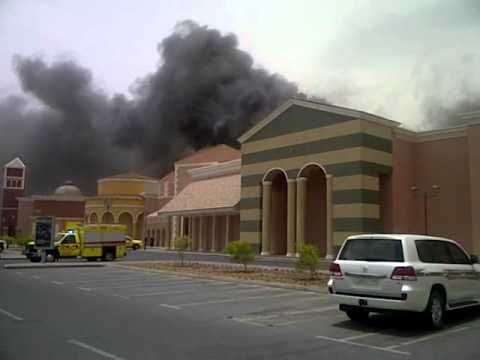
The fire started at the Nike shop within the
mall and engulfed part of the shopping centre. This was later discovered to
have been caused by illegal, faulty wiring within a fluorescent light at the
shop. The high temperatures probably caused a short circuit in the light
fitting. The fire quickly spread to the Gympanzee childcare nursery on the
first floor. Tragically the entrances to the nursery became blocked by smoke
which meant the 13 children and 4 members of staff were trapped in the nursery
area. According to the fire service, the staircase which went up to the nursery
also collapsed which made the situation even worse. Reports after the incident
showed that the one fire exit that could be used led straight into the fire,
and the other one had been locked from the outside. At first, the fire-fighters
did not know that there was a nursery inside the mall, but as soon as they
found out, they broke through the roof to try and rescue the children and their
teachers. Sadly it was too late and the 13 children, 4 teachers and 2
fire-fighters all lost their lives. The children were from across the world,
including Spain, Japan and France. Three of the teachers were from the
Philippines and one was from South Africa. Three of the children were triplets
from New Zealand, meaning tragically that their parents lost all of their
children at once.
Ethically this is a terrible tragedy and of
course can be called an accident as nobody deliberately started the fire.
However, it is not that simple. The statements from witnesses during the fire
and the major investigations afterwards show that there were lots of problems
and mistakes that caused the fire to spread and the escape and rescue processes
to be below the standards they should have been.
People who were at the scene during the fire,
said that nobody seemed to know what was going on and that the rescue operation
was chaotic. One American witness said that during the fire she could only hear
a very quiet sound which was like a buzzer – which was meant to be the fire
alarm. There were no alarms in the individual shops. The alarms in the mall
were so quiet that many people could not hear them at all. As the smoke inside
the mall got worse, there were no louder alarms at all. The witness said that
children were still sitting in restaurants eating and nobody was trying to
escape. She also said that there were no sprinklers on and nothing to warn
people that anything was wrong. Other people at the scene were told to carry on
eating their meals, one shopper came out of a changing room and found all the
staff had gone and in the VIP area some young men were posing for pictures even
though there was thick smoke. Obviously this all shows that there were no plans
in place for evacuation, that there were no sprinklers and that the fire alarms
were not loud enough. Other issues that were discovered were that there were no
correct or detailed floor plans which made life even more difficult for the
fire services. The investigation afterwards showed that some sprinklers and
alarms had failed to work and the floor plans did not have emergency exits
marked correctly.
In June 2013, five people were found guilty of
death by negligence. These included the two owners of the day nursery, the
chairman of the mall and the deputy manager. They were sentenced to six years
in prison and ordered to pay blood money to the families of the victims.
Evidence at the trial of those found guilty, discovered that in the past the
mall had received many fines for using flammable paint, which of course would
have made the fire even worse. The trial also found that the mall owners had
ignored requests to look after the fire alarms and sprinklers, which is why
many of them were not working. Another problem that came to light was that the
fire-fighters had not been properly trained to handle such fires. The one fire
exit that the children could have used had been locked from the outside by the
mall management. The trial also found that the mall did not have the correct
fire fighting equipment or any evacuation procedures and the fire alarms that
did exist were not loud enough.
So, although the fire started at the Nike shop
because of faulty wiring, if the paint used at the mall had not been flammable
then the fire may not have been so bad, or it may not have spread so much. Also
there would not have been as much black smoke which made the fire-fighters job
much harder. The lack of fire alarms meant that the staff and children in the
nursery did not have time to escape from the building. By the time the smoke
reached them they had only one exit – and this had been locked from outside. If
this had not been locked they could have all escaped and would still be alive.
It is very wrong that this had been locked. We can only guess that the managers
did this for security with no though for safety. Also the investigation found
that the nursery had not been licensed by the ministry of social affairs which
meant it did not have the safety conditions that it should have.
My take is that the fire could have been
prevented by making sure the wiring in the shop had been done correctly; and
the spread of fire could have been less if the mall had used fire safety paint
and had proper sprinklers. The lives in the nursery could have been saved if
they had proper alarms and safe exits. All of the problems seem to come down to
money not being spent on the safety of the building and proper regulations not
being followed.
References
